TO WALK • LOCAL GUIDE
Sailor’s Path Walk in Aldeburgh
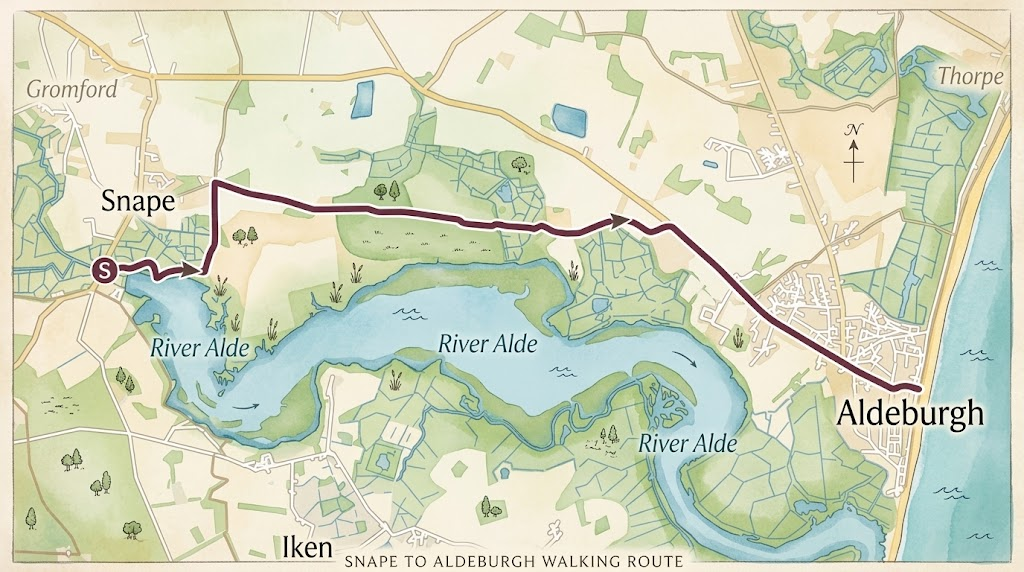
Few footpaths in East Anglia capture the shifting moods of land and sea quite like the Sailor’s Path walk from Snape to Aldeburgh. Spanning six miles of sweeping reedbeds, pine-scented heathland, and salt-cracked marshes, this route traces the steps of merchant seamen who once traded the storm-tossed North Sea for the sheltered inland quayside of Snape Maltings.
Today, walking the Sailor’s Path Snape to Aldeburgh is widely celebrated as one of the quintessential day hikes in the Suffolk Coast & Heaths National Landscape. Whether you set off under a crisp autumn sky or in the gentle warmth of midsummer, the journey delivers an ever-changing horizon where big Suffolk skies meet the quiet whispers of the River Alde.
In this detailed field guide, you will find everything you need to navigate the trail. We explore the rich maritime folklore of the path, detail practical turn-by-turn waypoints, recommend characterful pub stops, outline packing essentials, and explain how to manage your return travel with ease.
Sailor’s Path Walk Overview: Key Facts at a Glance
Before tying your bootlaces, here is a quick summary of the essential trail logistics:
- Start Point: Snape Maltings, Snape, Suffolk (IP17 1SR)
- End Point: Moot Hall / Seafront, Aldeburgh, Suffolk (IP15 5DS)
- Distance: 6 miles (approx. 9.7 km) one way; 12 miles (19.4 km) out-and-back
- Walking Time: 2.5 to 3.5 hours at an easy rambling pace
- Difficulty Rating: Easy to moderate. The route is exceptionally flat with negligible elevation gain, though sandy paths and tidal mud can slow your momentum.
- Terrain: Wooden boardwalks, compacted sandy heath, grass meadows, shingle, and tarmac lane approaches.
- Dog Friendliness: High, but dogs must remain on short leads through livestock fields and across sensitive nature reserves (particularly during ground-nesting bird season between March and August).
- Ordnance Survey Map: OS Explorer 212 (Woodbridge & Saxmundham)
The History and Heritage of the Sailor’s Path
To appreciate the Sailor’s Path walk to Aldeburgh, one must first understand the rhythm of life on the Alde estuary during the nineteenth and early twentieth centuries.
Why Did the Sailors Walk This Path?
During the height of Victorian coastal trade, Snape Maltings flourished as a bustling industrial barley malting operation established by entrepreneur Newson Garrett. Cargo vessels and traditional Thames sailing barges carried grain and malt between Snape and London via the North Sea.
Frequently, unpredictable coastal winds or adverse tides left these large sailing barges stranded downstream in Aldeburgh or Slaughden. Rather than wait idly aboard their vessels for days until currents turned, weary sailors abandoned ship and walked overland across the marshes to return home to Snape or inland villages.
Conversely, when tides ran high at Aldeburgh, crewmen living upstream would walk briskly across the heath in the twilight to meet their ships before the mooring lines were cast. The route became an unpaved lifeline etched into the landscape by working boots.
Benjamin Britten’s Creative Haven
Decades later, the solitary beauty of this marshland caught the imagination of composer Benjamin Britten. Britten, who made Aldeburgh his lifelong home and established the world-renowned Aldeburgh Festival at Snape Maltings, drew endless creative inspiration from the estuary.
Walking along the riverbanks, he listened to the evocative calls of curlews and the hollow rattling of dried reeds in the winter wind. These natural sounds found their way directly into masterpieces such as Peter Grimes and Curlew River. When you step along the path today, you walk through the exact soundscape that defined British twentieth-century classical music.
Which Way Should You Walk?
A common question among walkers planning the Sailor’s Path Snape to Aldeburgh is which direction offers the finest experience. While the route is fully signposted in both directions with distinctive yellow-banded posts bearing a sailing ship emblem, each direction possesses its own charm.
Walking from Snape to Aldeburgh (Recommended)
Beginning inland at Snape Maltings and walking toward the sea is the classic route. This direction mirrors the historic homeward trudge of the mariners and rewards you with the salty breeze and sweeping shingle beach of Aldeburgh at the finish line.
Arriving in Aldeburgh gives you immediate access to legendary fish and chip shops, seafront tea rooms, and coastal pubs. If you plan to walk only one way, traveling west to east ensures the sun stays predominantly at your back during morning departures.
Walking from Aldeburgh to Snape
Walking from the coast toward Snape Maltings is equally satisfying, especially for visitors staying in Aldeburgh cottages. This orientation allows you to finish your day amid the arts, independent boutiques, galleries, and hospitality of the converted Victorian granaries.
Concluding your hike with a local craft pint or a hearty seasonal meal at The Plough & Sail provides a wonderfully cosy finish after hours out on the exposed heathland.
Turn-by-Turn Route Guide: Snape Maltings to Aldeburgh
Craft Shops & River Viewing
Heather, Gorse & High Sandy Vantage
Breached Tidal Lagoon & Avocets
Shingle Beach & Moot Hall
Coastal Villas & High Street Pubs
Inland Scots Pines & Sandy Tracks
Stage 1: Departing Snape Maltings
Your journey begins on the river quayside at Snape Maltings. Take a moment to admire Barbara Hepworth’s bronze sculpture, Family of Man, standing silhouetted against the reeds, before locating the marked footpath trailhead at the eastern edge of the complex.
Follow the well-trodden grassy path along the northern bank of the River Alde. To your right, the mudflats stretch toward the channel, alive with the urgent piping of redshanks and oystercatchers feeding on the ebb tide. You will soon cross a series of sturdy timber footbridges over drainage dikes before heading gently away from the tidal edge toward the woodland fringe.
Stage 2: Snape Warren Nature Reserve
After clearing the lower riverbank, the path climbs gently onto the dry, sandy soils of Snape Warren, managed by the Suffolk Wildlife Trust. The transition in landscape here is striking. You leave waterlogged mud behind and enter an open expanse of heather, dwarf gorse, and scattered birch copses.
In late summer, the heath bursts into vibrant purples and golds, providing vital nectar for solitary bees and butterflies. Keep an eye out for woodlarks darting among the bracken, as well as the elusive European adder basking quietly along sandy track edges on warm mornings.
The path through the Warren offers elevated vantage points across the river bends, making it an ideal spot to pause for water and photographs. Follow the yellow marker discs diligently, as multiple intertwining tracks criss-cross the common land.
Stage 3: Hazlewood Marshes and the Tidal Breach
Continuing eastward, you cross the quiet Priory Road lane before reaching Hazlewood Marshes. This section represents one of the most fascinating ecological transformations in modern British conservation history.
Until December 2013, Hazlewood was a managed freshwater marsh grazed by cattle. However, during a severe North Sea tidal surge, the sea wall gave way under extraordinary water pressure. Rather than rebuilding the artificial sea defenses, the Suffolk Wildlife Trust chose to allow natural succession to take hold.
Today, Hazlewood is a dynamic intertidal saltmarsh. Bleached wooden fence posts poke out of brackish lagoons, and glasswort (samphire) covers the mud. A purpose-built bird hide overlooking the breach provides shelter and world-class views of black-tailed godwits, dunlins, and nesting avocets probing the shallows.
Stage 4: Through Pine Woodlands and Golf Links
Leaving the open expanse of Hazlewood Marshes, the Sailor’s Path walk enters a sheltered corridor of mature Scots pines and silver birch. The ground beneath your feet turns soft with dropped pine needles, offering welcome relief from the harder gravel sections.
The path skirts the perimeter of the historic Aldeburgh Golf Club, one of the oldest heathland courses in England. Follow the marked wayposts carefully to avoid encroaching onto the fairways, and keep dogs strictly on leads throughout this area.
As you pass through the woodland, the unmistakable scent of maritime pine mixes with salty sea air, signalling that the shoreline is drawing near.
Stage 5: Approaching Aldeburgh
The trail gradually transitions from sandy track to tarmac lane as you reach the outskirts of Aldeburgh along Golf Lane and the Saxmundham Road (A1094). Turn left onto the pavement and continue down toward the heart of the town.
Pass the charming pastel-washed brick cottages of Church Walk and descend past St Peter and St Paul’s Church, the final resting place of Benjamin Britten and poet George Crabbe. Within minutes, you emerge onto Aldeburgh High Street, with the sound of breaking waves welcoming you across the shingle ridge.
Wildlife Watching on the Suffolk Coast
The Sailor’s Path walk to Aldeburgh passes through protected environments recognized internationally as Ramsar sites, Special Protection Areas (SPAs), and Sites of Special Scientific Interest (SSSIs). Packing a pair of compact binoculars will substantially elevate your hike.
+---------------------+-----------------------+------------------------+
| Habitat             | Typical Wildlife      | Best Season            |
+---------------------+-----------------------+------------------------+
| Estuary Mudflats    | Avocet, Redshank,     | Autumn and Winter      |
| & Reeds             | Marsh Harrier, Teal   |                        |
+---------------------+-----------------------+------------------------+
| Lowland Heath       | Dartford Warbler,     | Spring and Summer      |
| (Snape Warren)      | Woodlark, Adders      |                        |
+---------------------+-----------------------+------------------------+
| Saltmarsh Lagoons   | Godwit, Lapwing,      | Year-round             |
| (Hazlewood Marshes) | Dunlin, Little Egret  |                        |
+---------------------+-----------------------+------------------------+
The Avocet: Symbol of Recovery
The pied avocet, with its distinctive upturned bill and stark black-and-white plumage, is the proud emblem of the Royal Society for the Protection of Birds (RSPB). Once completely extinct as a breeding species in the UK, avocets famously recolonized the reclaimed saltmarshes of Suffolk following the Second World War. On Hazlewood Marshes, you are virtually guaranteed sightings of these elegant waders scything through the brackish water.
Marsh Harriers and Bitterns
The extensive reedbeds lining the Alde riverbank are a stronghold for the western marsh harrier. Watch for their broad, fingered wings gliding low over the reeds, suddenly dropping into the vegetation to ambush small rodents or waterbirds. On quiet, frosty winter mornings, listen intently for the deep, foghorn-like booming call of the elusive Eurasian bittern resonating across the marshes.
What to Wear and Pack: Essential Gear
While the Sailor’s Path walk from Snape to Aldeburgh does not involve mountain ascents, East Anglian coastal weather can change swiftly. Being properly equipped ensures a comfortable, enjoyable trek.
Footwear: Boots vs. Trail Shoes
- Autumn & Winter: High-cut, waterproof leather or GORE-TEX walking boots are essential. After prolonged rain, sections around the river approaches and marsh fringe become deeply waterlogged and muddy.
- Spring & Summer: Lightweight hiking shoes or trail runners are ideal. Much of the trail through Snape Warren consists of well-drained sand, where breathable footwear prevents overheating.
Technical Clothing & Layers
- Base Layer: Choose moisture-wicking synthetic or merino wool tops rather than heavy cotton.
- Mid-Layer: A packable fleece or lightweight synthetic micro-puffer jacket provides quick warmth during breezy pauses.
- Outer Shell: The Suffolk coast is notoriously wind-scoured. A windproof, waterproof jacket with an adjustable hood will shield you from sudden coastal showers and biting easterlies coming off the North Sea.
Daypack Essentials
- Hydration: Carry at least 1 litre of water per person. There are no refilling stations between Snape Maltings and Aldeburgh.
- Trail Snacks: Dried fruit, flapjacks, and nuts provide steady energy along the track.
- Sun Protection: The open skies of the marsh offer virtually no shade for long stretches; bring broad-spectrum sunscreen and a peaked cap.
- Map & Compass: While mobile phone signal is generally adequate (O2 and EE have reasonable coverage), downloading offline maps on your smartphone or carrying an OS Explorer sheet ensures you never lose your bearings.
Where to Eat and Drink: Characterful Pub Stops
One of the great pleasures of rambling in Suffolk is the high standard of local produce and traditional alehouses. The Sailor’s Path is bracketed by some of the most celebrated dining spots in the county.
       [Snape Maltings]
       ├── The Plough & Sail (Traditional ales, fresh local seafood, log fires)
       └── River View Café (Fresh scones, artisan coffee, light lunches)

            │  (6-mile scenic walk)
            ▼

       [Aldeburgh Town]
       ├── The Mill Inn (Historic seaside taproom opposite the Moot Hall)
       ├── The Cross Keys (Coastal inn pouring Adnams directly on the beach)
       └── Aldeburgh Fish & Chip Shop (World-famous battered cod on the shingle)
At the Snape End
1. The Plough & Sail (Snape Maltings)
Located right at the start (or finish) of the path, The Plough & Sail is a historic, family-run pub featuring two distinct atmospheres: an informal, flagstone-floored public bar where muddy boots and dogs are welcomed warmly, and an elegant dining room. They pour well-kept Adnams cask ales alongside a seasonal menu highlighting locally caught fish and Suffolk pork.
2. River View Café & The Malt Café
If you prefer a lighter bite before setting out, the cafés within the Snape Maltings complex serve freshly brewed loose-leaf teas, artisan espresso, and warm cheese scones served with homemade fruit preserves.
At the Aldeburgh End
1. Aldeburgh Fish & Chip Shop
No visit to this corner of the world is complete without visiting the world-renowned Aldeburgh Fish & Chip Shop on the High Street. Coated in crisp, golden batter and fried traditionally in beef dripping, their fish is best enjoyed wrapped in greaseproof paper, eaten straight off the counter while seated on the beach wall overlooking the crashing waves.
2. The Mill Inn
Situated on the seafront directly opposite the Tudor Moot Hall, this charming, low-ceilinged pub dates back centuries. With roaring fires in winter, nautical memorabilia lining the walls, and a menu rich in coastal seafood, it is the ideal destination to toast the completion of your six-mile trek.
3. The Cross Keys
A seaside institution, The Cross Keys rests mere steps from the shingle. Operating under the stewardship of Southwold-based Adnams Brewery, it serves pristine pints of Adnams Ghost Ship and Southwold Bitter, accompanied by locally landed crab sandwiches.
Where to Stay: Pubs with Rooms and Coastal Retreats
Turning your walk into a weekend escape allows you to discover the wider Suffolk heritage coast at a leisurely pace. Here are some of the finest accommodations along the route.
Characterful Pubs with Rooms
- The Plough & Sail (Snape): Offering boutique rooms within the historic malting complex, this is an unbeatable choice for hikers who wish to wake up right at the trailhead. Rooms feature plush linens, en-suite walk-in showers, and complimentary breakfasts made with local farm produce.
- The Golden Key (Snape): Located half a mile inland from the Maltings in the picturesque village of Snape, this sixteenth-century coaching inn offers cosy, dog-friendly cottage rooms and an exceptional reputation for slow-cooked Sunday roasts.
- The White Lion Hotel (Aldeburgh): Facing the beach directly, this handsome hotel combines nautical elegance with modern comforts. Many sea-facing rooms provide sweeping views across the North Sea toward the historic lookout towers.
- The Brudenell (Aldeburgh): Positioned further south along the seafront terrace, The Brudenell offers floor-to-ceiling windows, an AA-rosette seafood restaurant, and contemporary coastal décor.
Holiday Cottages and Glamping
If you prefer self-catering accommodation, Suffolk boasts an exceptional array of converted fisherman cottages, modern eco-barns, and luxury timber lodges. Look for properties managed through local agencies such as Suffolk Secrets or Airship Suffolk for peaceful rural stays tucked within walking distance of the trails.
Return Travel Logistics: Planning Your Way Back
If you prefer not to turn around and complete the 12-mile round trip on foot, managing your return journey between Aldeburgh and Snape requires a small amount of forethought, as rural public transport runs on limited timetables.
+-------------------+--------------------+--------------------+--------------------+
| Travel Method     | Route / Operator   | Travel Time        | Practical Tip      |
+-------------------+--------------------+--------------------+--------------------+
| Local Bus         | Borders Bus No. 65 | Approx. 15-20 mins | Check seasonal     |
|                   |                    |                    | timetables ahead   |
+-------------------+--------------------+--------------------+--------------------+
| Local Taxi        | Coastal Cabs /     | Approx. 12 mins    | Book at least 2-4  |
|                   | A2B Cars           |                    | hours in advance   |
+-------------------+--------------------+--------------------+--------------------+
| Two-Car Shuttle   | Park one at each   | Approx. 10 mins    | Snape parking is   |
|                   | trail end          | drive              | free; Aldeburgh is |
|                   |                    |                    | pay-and-display    |
+-------------------+--------------------+--------------------+--------------------+
1. By Local Bus (Borders Bus Service 65)
The most sustainable way to return to your starting point is via the local bus network. The Borders Bus Service 65 links Aldeburgh High Street with Snape village:
- Boarding Point: Aldeburgh Shelter / High Street stops.
- Alighting Point: Snape Church or Snape Golden Key (note: you will need to walk 10–15 minutes down the marked footpath along Church Road from the village stop to reach the Snape Maltings car park).
- Frequency: Services generally run every two hours from Monday to Saturday, with reduced or no service on Sundays and bank holidays. Always check live departure times on the Suffolk Onboard Public Transport Portal before setting off.
2. By Local Taxi
Because rural bus services can be infrequent, booking a local taxi is often the most convenient choice, especially if you are traveling in a small group or with tired dogs.
- Aldeburgh Taxis: 01728 452777
- A2B Cars (Saxmundham): 01728 633003
- Coastal Cabs: 01728 830600
Important Travel Tip: Always book your return taxi before you embark on your morning walk. During peak summer weekends and bank holidays, local drivers are heavily booked for Aldeburgh wedding transfers, festival events, and train connections at Saxmundham Station.
3. The Two-Car Shuttle Strategy
If traveling with companions in two vehicles, park the first car at the public pay-and-display car park near the Moot Hall or Fort Green in Aldeburgh. Drive together in the second vehicle to Snape Maltings, where ample free visitor parking is available. At the end of the walk, your return vehicle will be waiting for you by the sea.
Practical Trail Tips and Walking Etiquette
To ensure a seamless, responsible day out on the trail, keep these practical considerations in mind:
1. Check Tide Tables Before Departure
While the modern Sailor’s Path has been extensively raised and fitted with sturdy timber boardwalks over the wettest marsh sections, exceptionally high spring tides or severe coastal storm surges can occasionally submerge low-lying paths near Hazlewood Marshes. Always consult local Admiralty Tide Tables for Orford Haven and Slaughden if setting out during winter gale warnings.
2. Protect Ground-Nesting Birds
The open heath of Snape Warren and the saltings of Hazlewood host rare ground-nesting species, including nightjars, woodlarks, and stonecurlews. From March 1 to August 31, keep dogs strictly on short, non-extendable leads and avoid stepping off the designated, waymarked route.
3. Ticks and Lyme Disease Awareness
Lowland heaths with bracken and grazing deer are prime habitats for sheep ticks (Ixodes ricinus). Wear long trousers tucked into your socks when walking through dense heather and bracken, especially during spring and early summer. Inspect yourself and your pets thoroughly after your walk.
4. Carry Cash for Small Purchases
While card readers are ubiquitous in town, rural farm honesty stalls selling seasonal honey, eggs, and fresh Suffolk apples along country lanes often rely on traditional cash drop boxes.
Frequently Asked Questions (FAQ)
How long does it take to walk the Sailor’s Path?
For an adult of average fitness walking at a steady, enjoyable pace, the 6-mile route takes approximately 2.5 to 3 hours. If you pause for birdwatching at Hazlewood Marshes or stop for a picnic on Snape Warren, allow 3.5 to 4 hours.
Is the Sailor’s Path suitable for pushchairs or wheelchairs?
Unfortunately, no. While the elevation profile is remarkably flat, the terrain includes rough, exposed tree roots, soft sand dunes, narrow timber boardwalk bridges with kissing gates, and shingle ridges that are unsuitable for standard pushchairs or wheelchairs. All-terrain mountain trikes may tackle some woodland sections, but gates restrict full transit.
Are there public toilets along the route?
There are excellent, clean public facilities at both ends of the trail: at Snape Maltings (beside the main visitor car park and quayside) and in Aldeburgh (behind the Moot Hall and adjacent to the beach car parks). There are no public restrooms along the trail between Snape and Aldeburgh.
Can I cycle the Sailor’s Path?
Cycling is strictly prohibited across the majority of the Sailor’s Path. The trail crosses fragile nature reserves and private estates designated solely for pedestrian public footpaths. Cyclists traveling between Snape and Aldeburgh should take the scenic national cycle route along the quiet country lanes via Friston instead.
Summary: A Classic Suffolk Pilgrimage
The Sailor’s Path walk from Snape to Aldeburgh is far more than a simple point-to-point ramble; it is an intimate encounter with East Anglia’s living heritage. In six short miles, you experience the transition from inland river commerce to wild coastal isolation, traversing ancient woodlands, purple heathlands, and wide-open coastal skies.
Whether your journey concludes with a pint of coastal ale beside a pub fire or a portion of piping hot fish and chips enjoyed against the sea wall, walking in the footsteps of Suffolk’s maritime ancestors remains one of the finest adventures the British countryside has to offer. Pack your daypack, check the forecast, and head out to discover this coastal path for yourself.